AI can generate a stunning shot. Making a complete film is a different challenge entirely – and 2026 is the first year it is genuinely achievable. Here is how.
AI filmmaking is often demonstrated as a single jaw-dropping clip. A real film is something else: a sustained story with consistent characters, coherent scenes, and audio that holds it together. The leap from impressive shot to complete film is the actual challenge, and it is finally within reach.
This guide walks through how to make a complete film with AI in 2026 – the workflow, the hard problems, and the tools that close the gap between a generated moment and a finished piece.
The Gap Between a Shot and a Film
The hardest part of AI filmmaking is not generating a great shot – it is generating the next shot that matches it.
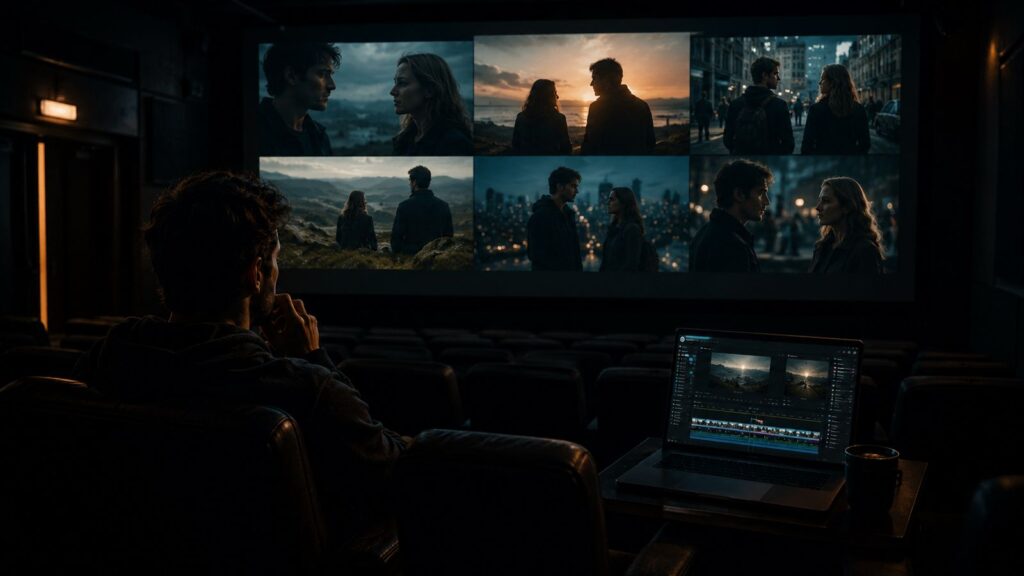
A film demands continuity: the same character looking the same across scenes, consistent style and lighting, coherent pacing, and audio that fits. A single generation solves none of that. The difficulty compounds with every additional shot.
This is why most “AI films” are really impressive montages. Closing the continuity gap is what separates a film from a reel, and it is where the real craft and tooling now focus.
The AI Filmmaking Workflow
A complete AI film follows a real production arc: concept, script, scene generation, assembly, and sound – just compressed and AI-assisted at each step.
Start with concept and script, then move to generating scenes that maintain consistency, assemble them with intentional pacing, and finish with audio. The stages mirror traditional filmmaking, but AI accelerates each and removes the physical production barrier.
Treating it as a structured production rather than a series of disconnected prompts is what yields a coherent film instead of a collection of clips.
Solving Consistency
Consistency – of character, style, and world – is the single biggest determinant of whether AI footage reads as a film.
Audiences forgive a lot, but not a character whose face changes between cuts. Maintaining consistent characters, style, and setting across scenes is the core technical problem of AI filmmaking, and the capability that matters most when choosing a tool.
Production-first platforms are built to hold this consistency across a full piece, rather than treating each generation as an isolated event.
Why a Production-First Tool Matters
You can assemble a film from clip generators by hand – but a tool built for complete production removes most of that manual burden.
Stitching a film together from a clip generator means manually forcing continuity, audio, and pacing the tool was never built to handle. It is possible, and exhausting. A production-first tool is designed to carry the whole arc from script to screen.
BigIdea is built precisely for complete production – which is what makes finishing a film realistic rather than a heroic editing project.
| Related reading on CineVision |
| From script to screen, with continuity intact. See how BigIdea makes complete films. Explore CineVision BigIdea. |