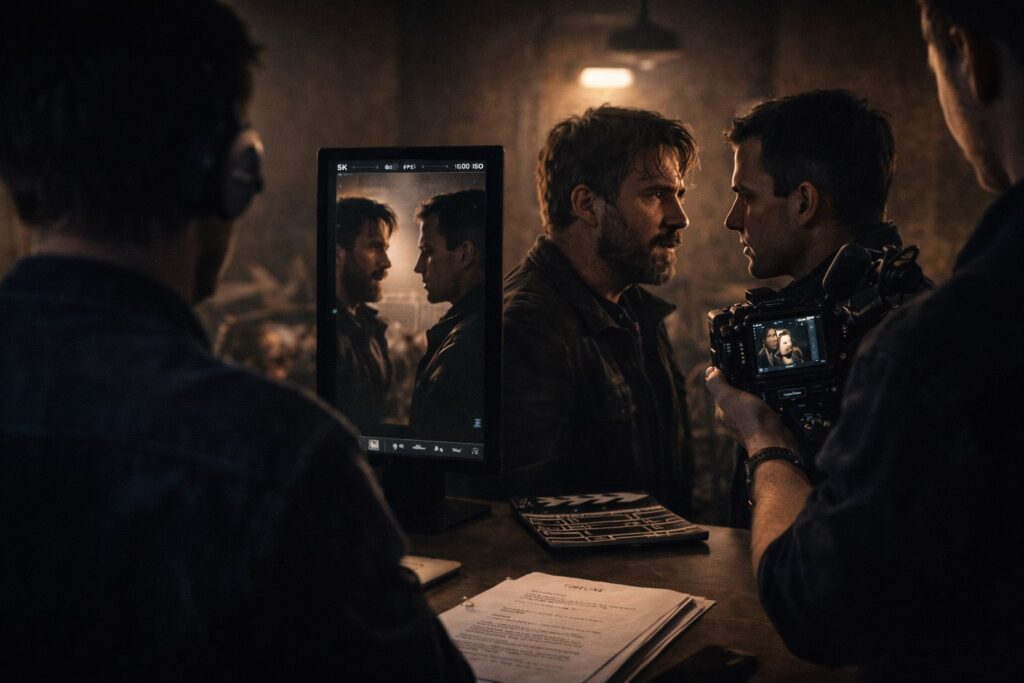
The microdrama format is one of the most accessible content categories for independent studios and creators to enter-but it requires a fundamentally different production mindset than traditional filmmaking. Here’s the definitive guide to how to create a microdrama that performs.
Step 1: Understand the Microdrama Format Requirements
- Episode length: 60–180 seconds. Most high-performing microdramas target 90 seconds per episode.
- Series length: 20–80 episodes. Longer series enable more binge-through revenue; shorter series launch faster.
- Aspect ratio: 9:16 (vertical) is mandatory. Design every shot for portrait viewing.
- Frame focus: Face-forward content. Character-driven stories outperform action-heavy ones in vertical.
- Cliffhanger architecture: Every episode ends mid-tension.
Step 2: Choose Your Genre and Hook
The dominant microdrama genres in 2026 are: billionaire romance, enemies-to-lovers, secret identity reveals, revenge arcs, and supernatural drama. These genres share a structural quality-they produce constant status reversals, which are the emotional engine of cliffhanger content.
| Your hook isn’t your premise-it’s your injustice. The thing that happened to your protagonist in episode one that the audience is emotionally committed to seeing resolved. |
Step 3: Write the Series Bible and Episode Arc
A microdrama series bible is lean by design. Using CineVision’s BigIdea AI script development tool, this entire document-logline, protagonist arc, antagonist function, 20-episode beat sheet-can be generated from a concept brief in hours, then refined by your creative team.
Step 4: Understand Microdrama Production Costs
| MICRODRAMA PRODUCTION COST BREAKDOWN (2026)
A 30-episode microdrama series using hybrid AI production typically costs $30,000–$80,000 total. Fully human-produced series range from $100,000–$300,000. AI-first productions using previz for all non-talent scenes can achieve a complete series under $30,000. |
| PRODUCTION ELEMENT | AI-ASSISTED COST | TRADITIONAL COST |
| Script Development (30 eps) | $2,000–$5,000 | $30,000–$80,000 |
| Storyboard/Previz | $3,000–$8,000 | $20,000–$60,000 |
| Production (Talent + Crew) | $20,000–$50,000 | $80,000–$200,000 |
| Post Production | $5,000–$15,000 | $20,000–$60,000 |
| Total (30-episode series) | $30,000–$78,000 | $150,000–$400,000 |
Step 5: Shoot for the 9:16 Frame
Every cinematographic decision must prioritize the vertical frame: shoot on smartphones or configure cinema cameras for portrait mode, light for faces and close-to-medium distances, avoid horizontal action blocking, and keep locations simple-one to two per episode maximum for budget control.
Step 6: Distribute and Monetize
Distribution determines whether your production cost returns revenue. The two options: post to third-party platforms with revenue sharing, or own your platform with CineVision’s TallTale and capture 100% of subscription and ad revenue. Studios with scale increasingly choose the latter.
| CineVision’s full suite-BigIdea for development, Reframe for conversion, TallTale for distribution-is the end-to-end OS for microdrama production and monetization. |