AI copyright in the United States comes down to one test: did a human control the expressive elements of the work? Purely AI-generated material cannot be copyrighted, and prompts alone do not count as control. Human expression that is visible in the output, and human selection, arrangement and modification of AI material, can be protected.
For a film, that question is no longer academic. It shows up in chain-of-title reviews, errors-and-omissions paperwork and distribution agreements, because a buyer needs to know that the seller owns what is being sold. This guide explains where the U.S. Copyright Office has drawn the line, what the courts have confirmed, and how to run generative tools on a production so the answer stays on your side.
Key takeaways
- U.S. copyright requires a human author. Material a machine generated on its own, or with insufficient human control over its expressive elements, is not protected.
- The Copyright Office’s January 2025 report concludes that prompts alone do not provide sufficient control, however long or detailed they are.
- Human expression that remains perceptible in an AI output, and creative selection, arrangement or modification of AI material, can be protected.
- A film that contains AI-generated effects or background artwork is still copyrightable as a whole, even if those AI elements are not protected on their own.
- The Supreme Court declined to hear Thaler v. Perlmutter in March 2026, leaving the human authorship requirement in place.
- How a tool is used matters more than whether it was used, so productions should document where human decisions were made.
Table of contents
- AI copyright: the short answer
- What the Copyright Office report concluded
- Thaler, Allen and the line in practice
- Why prompts are not enough
- Three kinds of AI use and how each fares
- Where artist-controlled workflows sit
- The other side of AI and copyright: infringement risk
- A practical checklist for productions
- Owning what you make
- Frequently asked questions
AI copyright: the short answer
Under current U.S. guidance, a work is protectable to the extent that a human determined its expressive content. If a machine made those choices and a person only asked for them, the machine-made material is not protected.
The technology is not the test. Two productions can use the same model and end up in opposite legal positions. On one, an artist makes granular decisions at every step and the generative component serves that intent. On the other, someone types a description and accepts what comes back. Only the first produces protectable material.
That is why “did you use AI?” is a poor question for a lawyer, a sales agent or an insurer. The useful question is where the tool was used, by whom, and with how much control over the result.
What the Copyright Office report concluded
The U.S. Copyright Office published Part 2 of its Copyright and Artificial Intelligence report, on copyrightability, on January 29, 2025. It sits alongside the Office’s March 2023 registration guidance for works containing AI-generated material, Part 1 on digital replicas (July 2024) and a pre-publication Part 3 on generative AI training (May 2025). For a production, Part 2 is the document that answers “do we own this?”
Its headline conclusions are worth reading in the original, but in plain terms they say:
- Existing copyright law can resolve these questions without new legislation.
- Using AI tools to assist rather than stand in for human creativity does not affect the availability of protection for the output.
- Copyright protects original human expression in a work even if the work also includes AI-generated material.
- Copyright does not extend to purely AI-generated material, or to material where there is insufficient human control over the expressive elements.
- Whether human contributions are enough is decided case by case.
- With current generally available technology, prompts alone do not provide sufficient control.
- Human authors keep copyright in their expression that is perceptible in AI outputs, and in creative selection, coordination, arrangement or modification of the outputs.
Two passages matter most to filmmakers. First, the report states that the distinction between assistive use and AI standing in for a human “depends on how the system is being used, not on its inherent characteristics.” Second, it gives a film-specific example: a film that includes AI-generated special effects or background artwork is copyrightable, even if the AI effects and artwork are not protected on their own.
The report also notes comments from the Motion Picture Association describing long-standing AI use in visual effects and post, including rotoscoping, color correction, sharpening and de-blurring. Those assistive uses are not the problem. The analysis only tightens when the system, rather than the artist, makes the expressive choices.
Key insight: A finished film does not lose its copyright because some shots contain generated elements. What can go unprotected is the machine-made material itself, which matters when that material is the part a buyer most wants to license.
Thaler, Allen and the line in practice
Two cases show where the line sits today: one at the fully automated extreme, one in the messier middle.
Thaler v. Perlmutter: no human, no copyright
Stephen Thaler sought to register an image he attributed to an AI system as its author. The Copyright Office refused, the courts upheld the refusal, and the question presented to the Supreme Court was whether works output by an AI system “without a direct, traditional authorial contribution by a natural person” can be copyrighted. According to SCOTUSblog’s case page, the Court denied the petition on March 2, 2026. The human authorship requirement stands.
Théâtre D’opéra Spatial: 624 prompts is still prompting
The Allen case is more instructive for creative teams, because a real person did a lot of work. In its September 2023 Review Board decision, the Office records that Jason Allen said he entered revisions and text prompts “at least 624 times” in Midjourney to reach the initial image, then edited it in Photoshop and upscaled it.
The Office accepted that his Photoshop edits could be registered. It refused to register the Midjourney-generated material, which Allen declined to disclaim, so the work could not be registered as submitted. Allen has since taken the dispute to federal court. The lesson for production is direct: volume of effort in prompting does not turn a model’s choices into yours, but hands-on human editing of the result can be protected.
Why prompts are not enough
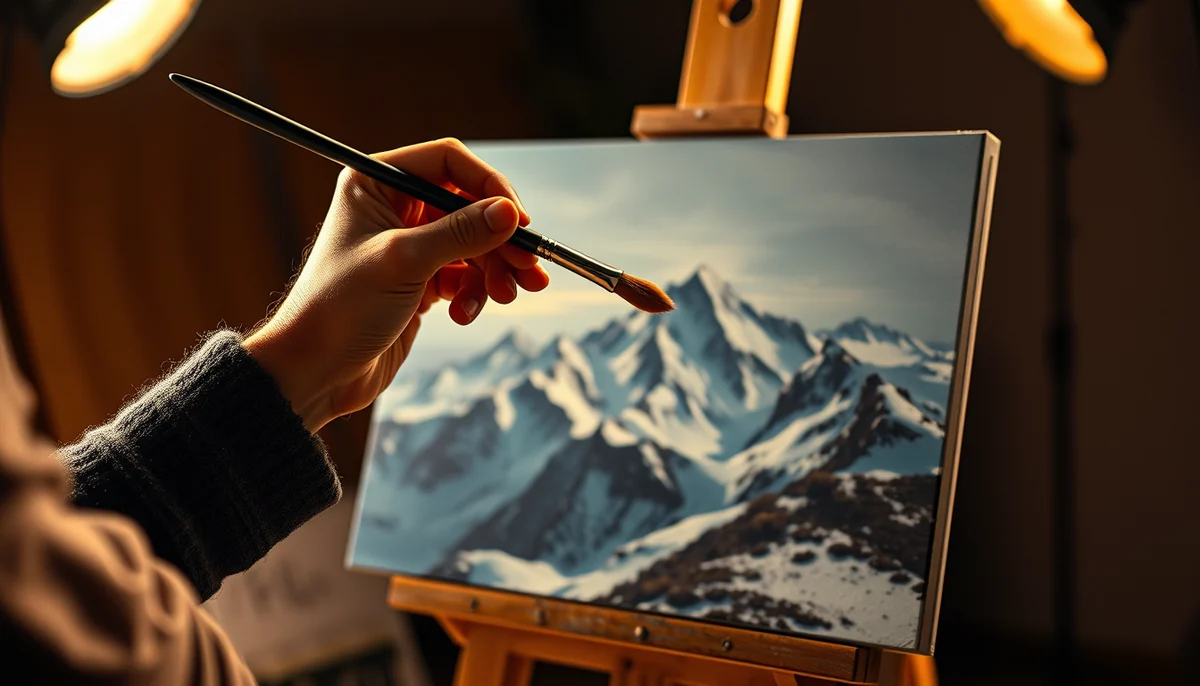
Prompts fail the test because they describe an outcome without fixing the expression. The model resolves the specifics, and that resolution is where the expressive content is decided.
The reasoning is not about effort or cleverness. A prompt can be long, thoughtful and original and still fall short, because the question is whether the human determined the exact composition, performance or rendering that appears on screen. With current generative systems, the prompt states an intention and the model decides the details.
The same report draws a sharp contrast with expressive inputs. In its Rose Enigma example, an artist fed their own hand-drawn illustration into a model. The Office registered the work, limited to the human drawing that remained clearly perceptible in the output. The drawing constrained the result in a way words alone did not.
For productions this is the practical hinge of AI copyright. Structural human inputs such as drawn reference, rough animation, blocked layouts and paint-overs leave a visible human imprint in the output. A text description does not.
Three kinds of AI use and how each fares
A yes-or-no view of AI does not survive contact with a real pipeline. A more useful map has three categories, each with a different copyright outcome.
| Category | Typical examples | Who decides the expression? | Likely copyright position |
|---|---|---|---|
| Utility and embedded AI | Denoise, upscaling, audio separation, roto mattes, depth extraction, wire removal | The artist; the tool solves a task with a defined correct answer | Assistive use; does not affect protection of the work |
| Human Generative Workflows (artist-controlled) | Custom models trained on the team’s own art, conditioning on drawn or animated inputs, paint-over and retrain loops | The artist, at each step, with the model rendering inside fixed constraints | Human expression, arrangement and modifications protectable; document them |
| Machine generative | Prompted shots, performances, voices or stories accepted as output | The model | Generated material not protected on its own |
Most productions already use the first category every day without calling it AI. Editors and colorists have worked with machine-learning features in their standard software for years. The third category is where the ownership gap opens. The second category is where most of the serious creative work with generative tools is now happening, and where the vocabulary has been missing.
Where artist-controlled workflows sit
Human Generative Workflows are pipelines where, as with CGI, human artists make the decisions and generative models serve them. They are the kind of AI-assisted process the Copyright Office’s analysis describes as protectable.
A typical artist-controlled pipeline looks like this:
- Artists hand-paint reference art that fixes the look: palette, light, line quality, the texture of the world.
- That art becomes training data for a small custom model fine-tuned on the team’s own work and original IP.
- Animators or layout artists supply structure, such as rough animation, poses or blocked camera, which conditions what the model renders.
- Outputs are reviewed against intent. Where they are wrong, artists paint over them and the model is retrained.
- Elements are assembled with deliberate camera, lighting and composition, then composited, graded and finished as on any other show.
Google DeepMind’s short Dear Upstairs Neighbors is a public example of this approach. The team’s own production write-up on Google’s blog describes fine-tuning custom models on the production designer’s concept art, and animators creating rough animation that the models then turned into stylized video, with tools for editing specific regions of a shot.
At every one of those points a person is deciding expressive content. That is the control the AI copyright analysis looks for, and it is why the question “where, and how, did you use it?” gets a defensible answer.
Key insight: The same practices that make generative output look like your film, not like the internet, are the ones that create the evidence of human authorship. Good craft and a clean copyright position come from the same habits.
The other side of AI and copyright: infringement risk
Ownership is only half of the AI and copyright question. The other half is whether generated material copies someone else’s protected work.
That risk is being tested in court. In June 2025, Disney, NBCUniversal and DreamWorks sued Midjourney in federal court in California, alleging that the service trained on their works and can generate images of their copyrighted characters. Georgetown Law’s Tech Institute summary quotes the complaint’s view that infringement is infringement whether an image is made with AI or another technology.
For a production, the practical point is simple. An output that closely resembles an existing character, frame or design carries the same risk as a hand-made copy, whatever tool produced it. Training a model on material you own or have licensed, and reviewing outputs for resemblance before they enter the cut, reduces that risk. The Office’s Part 3 report on training addresses the input side in far more detail and is worth giving to counsel.
A practical checklist for productions
The documentation burden is light if it is built in from the start, and close to impossible to reconstruct after picture lock.
- Record the transition point. Note when any generative tool moves from exploration into final footage, on which shots, and who approved it. That is where credit and copyright questions attach.
- Keep the human inputs. Archive reference paintings, rough animation, layout passes, paint-overs and retraining rounds. They are the evidence of authorship.
- Train on material you own or license. A model fine-tuned on your team’s artwork has a cleaner provenance story than one relying on scraped data.
- Classify each sequence. Label shots as utility, artist-controlled or machine generative in your own paperwork before a distributor asks.
- Disclose correctly when registering. The Office expects applicants to identify and exclude AI-generated material that is more than de minimis, as the Allen decision shows.
- Review before the cut. Compare generated elements against the approved reference and check for resemblance to third-party work.
- Have counsel read the primary documents rather than summaries, including this one.
Owning what you make
AI copyright is not really a question about technology. It is a question about authorship, and the rule on authorship has been consistent: work where people make the expressive decisions is protectable, and work where a machine makes them is not.
That makes the choice of tools and process a business decision as much as a creative one. Pipelines that keep artists in charge of the result, from treatment to final render, are easier to defend in a chain-of-title review. Big Idea is built on that principle, giving creators full control across script, storyboard, pre-viz and hybrid AI and live footage. For a wider view of how these tools fit a real production, see our guide to making a complete film with AI and how the script-to-screen workflow runs step by step.
This article is general information about AI and copyright under U.S. law, not legal advice. Decisions about a specific production should be taken with qualified counsel.